• Home
  • Services
    • Bomb & Explosives Detection
    • PBIED / Mobile Odor Detection
    • Firearms Detection
    • Narcotic Detection
    • Electronics Detection
    • Lithium-Ion Detection
    • Bed Bug Detection
    • Mold Detection
    • Dog Training
  • Sectors
    • Houses of Worship
    • Schools
    • Rehab Centers
    • Concert and Event Venues
    • Hotels and Casinos
    • Amusement Parks and Carnivals
    • Sports Venues and Stadiums
    • Residences
ScentWorks K9
  • About
  • Contact
Category:

Informational Posts

Detector Dogs in the NewsInformational Posts

Can Dogs Smell Guns? How Firearms Detection Dogs Work

by admin September 2, 2026
written by admin

Yes—properly trained detection dogs can locate odors associated with firearms, ammunition, and related materials. They are not identifying the shape of a gun. Instead, a firearms detection dog searches for specific target odors it has been trained to recognize and communicates a trained response to its handler.

That distinction matters for schools, event venues, workplaces, houses of worship, and other organizations evaluating a proactive weapons-detection program. A professional K9 team can search defined spaces efficiently, but the dog must be trained, handled, and deployed for the correct operational purpose.

What odor does a gun detection dog detect?

A firearm may carry several detectable odors, including odors connected with ammunition, propellants, firearm-related materials, and residues. The exact odor picture depends on the dog’s training program and the targets on which the dog has been conditioned.

In practical terms, the handler is not asking the dog to “find a gun” as a visual object. The dog is searching for a learned odor. When the dog encounters that odor, it shows a trained change of behavior or final response that the handler interprets.

Can dogs smell gunpowder?

Dogs can be trained to recognize odors associated with gunpowder and ammunition. Their powerful sense of smell allows them to identify target odor even when a firearm or ammunition is concealed from view. Performance still depends on training quality, environmental conditions, odor availability, search planning, and the experience of the handler.

A K9 indication should be handled according to the organization’s established safety procedures. Detection dogs provide a specialized search capability; they do not replace law enforcement, emergency response plans, access control, or other physical-security measures.

Where can firearms detection dogs search?

A search plan should be designed around the location, concern, schedule, and legal or organizational requirements. Depending on the assignment, professional firearms detection dogs may be used to search:

  • School lockers, classrooms, common areas, parking areas, and defined student-property locations
  • Event entrances, backstage areas, perimeters, vendor spaces, and priority checkpoints
  • Offices, warehouses, industrial facilities, and employee common areas
  • Vehicles, luggage, bags, storage areas, and rooms
  • Stadium concourses, suites, service corridors, loading areas, and other controlled spaces

The best deployment is not simply the largest possible search. It is a planned search focused on the areas most relevant to the organization’s security objective.

Static searches and mobile odor detection are different

Traditional firearms-detection searches usually involve a dog working through defined areas, objects, rooms, vehicles, or property. The handler directs a systematic search for target odor in the environment.

Mobile odor detection dogs are trained for a different operational challenge: screening moving pedestrian populations for a target odor carried by a person. Depending on its training, a mobile odor dog may support detection of explosives-related or firearms-related odor while people continue moving through an area. Mobile teams can also perform many static-search functions when their certifications, training, and deployment plan support that use.

The right choice depends on whether the primary objective is searching a defined space, screening people in motion, or combining both capabilities within a broader security plan.

How a professional K9 firearms search is planned

Effective deployments begin before the dog starts searching. The provider and client should discuss the reason for the search, site layout, priority areas, access requirements, expected foot traffic, operational restrictions, and the organization’s response plan.

A typical process includes:

  1. Risk and objective review: Define what the organization needs to protect and what type of search supports that goal.
  2. Site planning: Identify priority spaces, timing, access points, site contacts, and areas that require special coordination.
  3. K9 deployment: The handler directs the dog through a systematic search while monitoring behavior and environmental conditions.
  4. Response coordination: The client follows its established policies and contacts law enforcement when appropriate.

Can gun detection dogs work at schools and public events?

Yes. Schools and campuses may use detection dogs for planned sweeps, recurring deterrence programs, or a response to a defined concern. Learn more about K9 detection services for schools and campuses.

Concerts, festivals, stadiums, and other public gatherings may incorporate K9 teams into pre-event sweeps, entry operations, backstage searches, parking or vehicle areas, and layered security plans. Explore options for concert and event K9 security and stadium and sporting-event K9 services.

What should an organization ask a K9 provider?

Before engaging a provider, ask what odors the dog is trained to detect, how teams maintain proficiency, what environments they regularly work in, how the search will be documented, and how the provider coordinates with on-site security and law enforcement.

ScentWorks K9 provides professional detection services across North America. Our capabilities include firearms, explosives, PBIED/mobile odor, narcotics, lithium-ion battery, electronics, bed bug, and mold detection. ScentWorks K9 is designated by the U.S. Department of Homeland Security under the SAFETY Act, and the company maintains applicable ATF and DEA licensing for its detection and training operations.

Plan a firearms detection deployment

A firearms-detection program should be matched to the location and the actual security concern. ScentWorks K9 can help determine whether a static search, recurring K9 program, event deployment, mobile odor capability, or combination is appropriate.

Request a K9 consultation or call 1-888-HIR-EAK9 to discuss your site, schedule, and operational goals.
September 2, 2026 0 comments
0 FacebookTwitterPinterestEmail
Informational Posts

Bed Bug Detection Dogs for Hotels: An Inspection Planning Guide

by admin August 31, 2026
written by admin 6 mins read

Bed bug detection dogs for hotels can help hospitality teams inspect rooms and other defined areas for odor associated with live bed bugs and viable eggs. Canine inspection is especially useful when management needs to evaluate multiple rooms efficiently, narrow the area requiring closer examination, or support an early-detection program.

A professional inspection still requires preparation, a clear scope, confirmation procedures, and coordination with a qualified pest-management provider. The dog identifies trained odor; it does not perform treatment or replace the decisions of the hotel and pest-control professionals.

How canine bed bug inspection works

The handler guides the dog through approved rooms and spaces using a consistent search pattern. The team may examine beds, upholstered furniture, baseboards, luggage areas, closets, adjoining spaces, staff areas, and other locations included in the plan. When the dog recognizes trained target odor, it communicates a trained response to the handler.

Learn more about ScentWorks K9’s bed bug detection dog services and our work with hotels and casinos.

When hotels use bed bug detection dogs

  • investigating a guest report or suspected room
  • checking adjacent, above, and below rooms
  • supporting pre-treatment inspection
  • evaluating rooms after treatment when appropriate
  • screening furniture, staff spaces, laundry areas, or storage
  • conducting scheduled inspections in higher-risk areas
  • supporting due diligence during acquisitions, renovations, or reopening

The inspection scope should be based on the property’s objectives and pest-management plan rather than an arbitrary number of rooms.

How to prepare hotel rooms

Preparation should make rooms accessible without disturbing evidence or spreading insects. Hotels should follow instructions provided by the canine and pest-management teams. Typical planning may include:

  • providing master keys and an authorized escort
  • identifying occupied, vacant, out-of-order, and recently treated rooms
  • limiting strong cleaning chemicals, fragrances, or other distracting odors immediately before inspection
  • ensuring beds, furniture edges, baseboards, closets, and luggage areas are accessible
  • documenting recent treatments, guest reports, room moves, and maintenance activity
  • controlling unnecessary movement through rooms being inspected

Do not move bedding, furniture, or guest property solely to prepare unless the inspection team instructs you to do so.

Occupied versus vacant rooms

Vacant rooms are often easier to schedule and control. Occupied-room inspection requires additional coordination around guest privacy, property access, belongings, and hotel policy. Management should determine who authorizes entry, who accompanies the team, and how communications will be handled.

The provider should remain within the approved scope and should not make guest-relations or treatment decisions.

What happens after a canine response?

A canine response is actionable inspection information, not a treatment plan by itself. Hotels should establish a confirmation and escalation process with their pest-management professional. Depending on the property’s procedures, follow-up may include visual inspection, monitoring devices, expanded canine inspection of nearby rooms, treatment planning, or other pest-control measures.

Clear records should identify the room or location, inspection date, handler, search scope, observed response, and any follow-up assigned by management.

Can dogs distinguish live activity from old evidence?

Professional bed bug dogs are generally trained for odor associated with live bed bugs and viable eggs rather than stains, shed skins, or dead insects alone. Hotels should ask providers exactly what the dog is trained to detect and how proficiency is maintained and documented.

Building an early-detection program

Recurring inspections can help hotels focus on selected rooms or risk areas before a concern expands. A program may prioritize rooms associated with reports, high turnover, long stays, upholstered furnishings, employee areas, laundry operations, or incoming furniture.

Frequency should reflect property size, history, occupancy, risk tolerance, pest-management guidance, and operating needs. A scheduled program works best when inspection results, confirmation, treatment, and follow-up records are connected.

Questions to ask a canine provider

  • Is the dog trained for live bed bugs and viable eggs?
  • How are maintenance training and proficiency documented?
  • Does the team have experience in hotels and occupied properties?
  • What room preparation is required?
  • How does the handler communicate and document a response?
  • How are distractions, residual treatment odors, and inaccessible areas handled?
  • What inspection pace protects canine accuracy and welfare?
  • How should the hotel coordinate confirmation and treatment?

Frequently asked questions

Can a bed bug dog inspect an entire hotel?

Large properties can be inspected, but scope, schedule, room access, breaks, occupancy, and operational limits should be planned in advance. Some hotels begin with priority rooms and expand based on findings.

Does a canine response mean a room must be treated?

The hotel and its pest-management professional determine confirmation and treatment procedures. The K9 team supplies detection information rather than treatment decisions.

Can dogs inspect apartments and residences?

Yes. Similar planning principles can apply to residences and multi-unit housing, with appropriate access, privacy, preparation, and follow-up procedures.

How soon after treatment can a dog inspect?

Timing depends on the treatment method, products used, ventilation, provider protocols, and the inspection objective. Coordinate timing with both the canine and pest-management professionals.

Schedule a hotel bed bug inspection

ScentWorks K9 provides discreet bed bug detection services for hotels, hospitality properties, residences, and managed facilities. We can help define room scope, preparation, access, scheduling, documentation, and follow-up coordination.

Request a consultation to discuss your property, number of rooms, occupancy, inspection objective, and preferred schedule.

August 31, 2026 0 comments
0 FacebookTwitterPinterestEmail
Informational Posts

Drug Detection Dogs for Schools: A Planning Guide for Administrators

by admin August 31, 2026
written by admin 7 mins read

Drug detection dogs for schools can help administrators evaluate defined areas and objects for trained narcotics-related odors while minimizing disruption to the school day. A professional K9 deployment should be planned around the district’s policies, legal guidance, campus layout, educational goals, and established response procedures.

This guide outlines practical considerations for public and private schools, colleges, vocational programs, and other educational facilities considering a narcotics-detection canine program.

What does a school drug detection dog do?

A narcotics detection dog is trained to recognize selected controlled-substance odors. The handler conducts a systematic search of locations and objects included in the operational plan. Depending on school policy and the assignment, that may include lockers, parking areas, unoccupied classrooms, common areas, storage spaces, vehicles, bags or other defined property.

The dog communicates trained behavior to the handler when it encounters target odor. That information is then handled under the school’s existing policies and response procedures. The K9 team does not determine discipline, establish criminal liability, or replace administrative and legal decision-making.

Learn more about ScentWorks K9’s narcotics detection dog services and our work with schools and educational facilities.

Define the school’s objective first

Before scheduling a canine team, administrators should identify the purpose of the deployment. Common objectives may include prevention and deterrence, a recurring safety program, a scheduled campus sweep, vehicle or locker-area screening, or support for an established concern.

Planning questions include:

  • Which buildings, parking areas, lockers, vehicles, rooms, or objects are within scope?
  • Will students and staff be present in the search area?
  • Who controls access and accompanies the handler?
  • What district policy governs K9 searches and any follow-up?
  • Who receives information from the handler?
  • How will disruption, communication, and confidentiality be managed?

A clear objective helps the provider create an orderly search plan and prevents the canine assignment from expanding beyond the school’s approved scope.

Coordinate policy, privacy, and legal review

Search rules and student protections can vary by jurisdiction, school type, policy, location, and circumstances. Schools should consult their own counsel, board policies, law-enforcement partners when appropriate, and applicable state and local requirements before conducting a K9 program.

The operational plan should distinguish between searching an environment or object and conducting any further administrative or law-enforcement action. ScentWorks K9 provides detection capability; the school and appropriate authorities remain responsible for policy decisions, consent, access, evidence handling, discipline, notifications, and legal compliance.

Common school search areas

Schools may prioritize different locations depending on campus design and policy. Potential search areas include:

  • Lockers and corridors: planned in sections to maintain orderly coverage.
  • Parking areas and vehicles: subject to the school’s authority, policy, and approved scope.
  • Unoccupied classrooms: scheduled to reduce disruption and clarify access.
  • Common areas: cafeterias, auditoriums, restrooms, athletic areas, and shared spaces when included in the plan.
  • Storage and administrative areas: defined based on access and operational priorities.
  • Bags or other property: only when authorized under the school’s policy and search plan.

The provider should receive accurate maps, parking information, access instructions, and any environmental restrictions before arrival.

Should students be present during a K9 search?

Schools often plan searches to reduce unnecessary student interaction and disruption, but the appropriate approach depends on policy and legal guidance. Administrators should determine where students and staff will be, how movement will be controlled, and what communication will occur before, during, and after the deployment.

The canine provider should understand the approved search boundaries and should not improvise policy decisions onsite.

Recurring programs versus one-time searches

A single search provides information about defined areas at a particular time. A recurring program can add deterrence and allow administrators to vary schedules and coverage, but it still requires clear policies and consistent procedures.

Recurring plans may rotate among parking areas, lockers, common spaces, buildings, or campuses. Administrators should document objectives, frequency, access, provider coordination, response procedures, and how results are reviewed over time.

How to prepare the campus

  1. Confirm authority and policy. Complete internal legal, administrative, and board review as required.
  2. Define the scope. List every approved building, area, vehicle group, locker bank, or object category.
  3. Set the schedule. Coordinate class changes, buses, parking activity, athletics, deliveries, and building access.
  4. Assign school contacts. Designate personnel to meet, escort, and communicate with the handler.
  5. Establish response procedures. Decide in advance who receives information and controls any follow-up.
  6. Protect the search environment. Limit unplanned movement through areas being searched when practical.

What to ask a school K9 provider

  • Which narcotics-related odors is the dog trained to detect?
  • How are training, maintenance, and proficiency documented?
  • Does the team have experience in schools and similar public environments?
  • How does the handler communicate a trained response?
  • What information is needed to create the search plan?
  • How are canine welfare, breaks, temperature, and surfaces managed?
  • What licensing, insurance, and operational documentation is available?
  • How will the provider remain within the approved scope?

DEA licensing and professional controls

ScentWorks K9 is federally licensed by the Drug Enforcement Administration for the authorized handling of applicable controlled-substance training materials. Professional narcotics-detection programs should use appropriate storage, handling, documentation, contamination control, maintenance training, and quality-assurance practices.

Licensing supports the regulated training program; it does not replace the school’s responsibility to establish lawful policies and procedures for its specific environment.

Narcotics dogs, firearms dogs, and explosives dogs are different

Detection categories are not interchangeable. A dog trained for narcotics-related odors should not be assumed to detect firearms or explosives. Schools with broader safety goals should define each threat and request the appropriate capability.

Explore our firearms detection dogs, explosives detection services, and complete K9 detection services.

Frequently asked questions

Can drug detection dogs search school lockers?

They may be used to evaluate locker areas when that search is authorized by the school’s policies and applicable requirements. Administrators should obtain their own legal and policy guidance.

Can a K9 indication prove that drugs are present?

A trained response provides information to the handler. The school and appropriate authorities determine any follow-up under their established procedures; the dog does not make disciplinary or legal decisions.

Can schools schedule random K9 visits?

A recurring or varied schedule may be possible when supported by school policy, legal review, provider availability, and a defined operational plan.

Will the dog interact with students?

Deployment design can often minimize direct interaction. The school should determine student location and movement based on policy, legal guidance, and campus operations.

Plan a school narcotics-detection program

ScentWorks K9 provides professional detection-dog services for schools and organizations across North America. We can help administrators define search areas, scheduling, coverage, provider coordination, and recurring program options.

Request a consultation to discuss campus layout, approved search scope, scheduling, policy coordination, and the detection capability your school needs.

August 31, 2026 0 comments
0 FacebookTwitterPinterestEmail
Informational Posts

Bomb Detection Dogs for Events: A Security Planning and Hiring Guide

by admin August 31, 2026
written by admin 8 mins read

Hiring bomb detection dogs for events involves more than placing a K9 team near an entrance. Effective explosives-detection planning begins with the event’s threat profile, footprint, schedule, pedestrian flow, delivery activity, and existing security procedures. Those details determine where a canine team can provide the most useful coverage and whether the operation needs static searches, mobile screening, or both.

This guide explains how event organizers, venue managers, security directors, schools, houses of worship, and corporate planners can prepare for a professional explosives-detection deployment.

What bomb detection dogs can do at an event

Bomb detection dogs—more precisely called explosives detection dogs—are trained to recognize selected explosive-related odors. A traditional team can systematically search defined locations and objects such as seating areas, rooms, stages, vehicles, bags, deliveries, loading zones, storage spaces, and exterior approaches.

Depending on the event and the team’s trained capability, K9 operations may support:

  • pre-opening sweeps of public and restricted areas
  • searches of stages, backstage spaces, green rooms, and production areas
  • vehicle and loading-area screening
  • inspection of deliveries, equipment, baggage, and priority objects
  • visible deterrent patrols during operating hours
  • mobile odor screening of moving pedestrian traffic
  • targeted follow-up searches requested by authorized security personnel

Learn more about ScentWorks K9’s bomb and explosives detection dog services.

Start with the event objective

The first planning question is not “How many dogs do we need?” It is “What security problem are we trying to address?” A pre-opening venue sweep, guest-arrival screening, recurring patrol, delivery inspection, and response to a specific concern are different assignments.

Define the objective in operational terms:

  • What areas or items must be searched?
  • When must those searches be completed?
  • Which areas will remain controlled after being cleared?
  • How many entrances, loading points, parking areas, and restricted zones are active?
  • Will guests remain in motion, form queues, or undergo individual screening?
  • Who receives information from the K9 handler and controls follow-up action?

A clear objective allows the provider to recommend coverage around the actual environment instead of applying a generic staffing formula.

Pre-event sweeps and maintaining cleared areas

A pre-event sweep is often most useful when the searched area can be controlled afterward. If vendors, employees, deliveries, or equipment continue entering an area after it has been cleared, the security plan should address that activity. Otherwise, the conditions established by the search may change before guests arrive.

Organizers should coordinate search timing with:

  • vendor and production load-in
  • catering and merchandise deliveries
  • employee and contractor access
  • performer or team arrival
  • doors opening to attendees
  • re-entry and credential procedures

For stadiums and sporting events, the search plan may include seating bowls, suites, locker areas, loading docks, service corridors, parking zones, and public approaches. For concerts and event venues, stages, production spaces, equipment cases, backstage areas, temporary structures, and vendor activity may require special attention.

Static explosives searches versus mobile screening

Traditional explosives detection and PBIED mobile odor screening are complementary but distinct capabilities.

  • Traditional static search: the handler systematically presents rooms, vehicles, bags, objects, or defined areas for examination.
  • PBIED or mobile odor screening: the team evaluates airborne explosive-related odor in dynamic environments where people and carried items remain in motion.

An event may use a static sweep before opening and mobile screening during guest arrival. A mobile odor team may also perform static searches when that capability is included in its training and validation. The provider should confirm the team’s exact trained odors and operational abilities before deployment.

Read our comparison of traditional explosives detection dogs and PBIED mobile odor canines, or explore dedicated PBIED and mobile odor detection services.

How many K9 teams does an event need?

There is no responsible universal number. Staffing depends on the assignment rather than attendance alone. A compact venue with one controlled entrance presents a different search problem from a stadium, festival, or multi-building campus with numerous approaches and service areas.

Factors that influence K9 staffing and scheduling include:

  • total search area and number of priority locations
  • available time before opening
  • number and layout of entrances
  • expected pedestrian volume and arrival peaks
  • vehicle, vendor, and delivery traffic
  • indoor and outdoor airflow conditions
  • the need for breaks, rotation, and sustained coverage
  • whether teams must cover multiple simultaneous assignments

A professional provider should review maps, schedules, access points, and coverage priorities before recommending the number of teams.

Airflow and crowd movement matter

Odor does not remain in a fixed location. It moves with wind, ventilation, open doors, temperature changes, people, vehicles, and temporary structures. This is especially important for mobile screening, but airflow can also affect how a traditional team approaches entrances, loading areas, corridors, and exterior spaces.

During planning, identify:

  • prevailing outdoor wind and weather exposure
  • heating, cooling, and ventilation outlets
  • revolving doors, tunnels, concourses, and covered approaches
  • queue locations and crowd-density changes
  • temporary tents, barricades, fencing, and screening lanes
  • alternate entrances used during congestion or emergencies

The deployment plan may need to change if crowd flow or environmental conditions differ from the original assumptions.

Integrating K9s with existing event security

Explosives-detection dogs are one component of layered security. They do not replace bag policies, credentialing, access control, magnetometers, x-ray systems, cameras, trained security personnel, emergency procedures, or law-enforcement coordination.

Before deployment, establish:

  1. Command and communication. Identify the event contact who directs priorities and receives information from the handler.
  2. Access authority. Ensure K9 teams can enter every assigned area at the scheduled time.
  3. Search sequence. Define which zones must be completed first and how cleared areas will be controlled.
  4. Response procedures. The client and appropriate authorities should determine what happens after a trained response or other concern.
  5. Documentation. Clarify deployment reports, schedules, access records, and any compliance requirements.

Questions to ask before hiring a bomb-dog provider

Event planners should evaluate the program behind the dog and handler—not simply whether a provider advertises “K9 security.” Useful questions include:

  • Which explosive-related odors is the team trained to detect?
  • How are maintenance training and proficiency documented?
  • Has the team worked in crowds, loud environments, slick surfaces, stairs, vehicles, and event conditions?
  • Can the team perform static searches, mobile screening, or both?
  • What information is needed to design the search pattern?
  • How are canine welfare, rotation, and environmental limits managed?
  • What insurance, licensing, reporting, and operational documentation is available?
  • How will the handler communicate with event security?

Licensing and SAFETY Act designation

ScentWorks K9 is federally licensed by ATF for the authorized handling of applicable explosives training materials. Our approved traditional explosive-detection canine services for static environments—including searches of vehicles, baggage, and commercial facilities—are designated under the Department of Homeland Security SAFETY Act.

The designation applies to the approved technology and scope. It should not be described as a blanket endorsement of every K9 service or every deployment model, and event planners should evaluate the specific capability being requested.

When should an event book K9 coverage?

Early planning provides time to review maps, schedules, access restrictions, parking, load-in activity, crowd flow, and coordination needs. Large or complex events may require more lead time, especially when multiple teams, travel, recurring coverage, or coordination with outside agencies is involved.

For shorter-notice needs, provide the clearest possible information about the objective, location, event date, requested hours, attendance, entrances, and priority search areas. Availability and a safe operational plan still determine what can be supported.

Frequently asked questions

Can bomb detection dogs screen a crowd?

PBIED or mobile odor teams can be trained to evaluate airborne explosive-related odor in moving pedestrian traffic. This differs from a traditional item-by-item or area search and requires appropriate training, validation, airflow assessment, and deployment design.

Can one team search an entire stadium or festival?

Coverage depends on the footprint, available time, priorities, crowd flow, and assignment. Large or simultaneous search requirements may need multiple teams or phased coverage.

Do bomb dogs replace security screening equipment?

No. K9 detection, physical screening, technology, access control, and trained personnel provide different capabilities. They are most effective when integrated into a coordinated plan.

Can an explosives dog also detect firearms?

Explosives and firearm odors are separate assignments. A team must be trained and validated for the specific odors included in the deployment. For firearm-related event screening, see our guide to mobile firearm detection dogs.

Plan event K9 security with ScentWorks K9

ScentWorks K9 supports venues, events, stadiums, campuses, businesses, and organizations across North America. We can help determine whether a pre-event sweep, recurring patrol, PBIED mobile screening, traditional explosives search, or combined deployment fits the event.

Request a consultation to discuss the event footprint, schedule, entrances, loading activity, expected attendance, search priorities, and existing security operation.

August 31, 2026 0 comments
0 FacebookTwitterPinterestEmail
Informational PostsUncategorized

Mobile Firearm Detection Dogs: How K9 Crowd Screening Works

by admin August 31, 2026
written by admin

Mobile firearm detection dogs give security teams a way to evaluate moving pedestrian traffic for trained firearm-related odor without requiring every person to stop for an individual K9 presentation. The capability can support entrances, approaches, concourses, campuses, venues, and other environments where people must continue moving while security personnel maintain awareness of potential threats.

The phrase mobile firearm detection describes both the target odor and the way the team works. It is not the same assignment as a traditional close search, and it is not interchangeable with explosives detection. The dog must be specifically trained and validated for the odors included in the requested deployment.

What is a mobile firearm detection dog?

A mobile firearm detection dog is trained to recognize selected firearm- or ammunition-related odors while working in a dynamic environment. Instead of checking one bag, vehicle, room, or object at a time, the team evaluates airborne odor as people and carried items move through a defined search area.

The handler observes changes in the dog’s behavior and works the search pattern established for the site. If the team presents trained behavior associated with target odor, designated security personnel follow the organization’s response procedures. The K9 team supports a layered security operation; it does not replace access control, screening technology, trained security staff, or law-enforcement response.

For conventional area, vehicle, object, or baggage searches, learn more about our firearms detection dog services.

How does K9 crowd screening work?

Odor moves with air. It can travel away from a person or carried item, gather around obstacles, separate into intermittent strands, and change as doors open, ventilation systems cycle, or crowds shift. Mobile odor dogs are trained to work within that changing odor picture.

A professional deployment typically considers:

  • Pedestrian flow: where people enter, merge, pause, queue, or change direction.
  • Air movement: wind, doors, heating and cooling systems, tunnels, concourses, and temporary structures.
  • Search boundaries: the areas the K9 team can cover without creating unnecessary congestion.
  • Operational timing: arrival peaks, employee access, deliveries, pre-opening activity, and event transitions.
  • Response planning: who receives information from the handler and what established procedures follow.

The objective is not to have a dog simply walk near a crowd. The objective is to design a repeatable search pattern that gives the trained team a useful opportunity to encounter airborne target odor while fitting the site’s broader security plan.

Where mobile firearm detection may be useful

Mobile firearm detection can be considered anywhere security personnel must monitor moving people while preserving reasonable throughput. Potential environments include:

  • stadiums and sporting events
  • concerts, festivals, and event venues
  • school and university arrival areas
  • corporate campuses and large workplaces
  • houses of worship and community gatherings
  • hospitality, entertainment, and public-facing properties
  • temporary events with changing entrances or pedestrian routes

The appropriate model depends on the site. Some organizations may need a defined screening position near an entrance. Others may benefit from movement along approaches, outer perimeters, concourses, or selected interior areas. A site assessment helps determine whether mobile screening, traditional searches, or a combination is the better fit.

Mobile screening and static firearm searches are complementary

Mobile screening does not make traditional firearm searches unnecessary. The two approaches solve different search problems.

  • Static or traditional firearm detection: a handler systematically presents defined rooms, vehicles, lockers, bags, packages, or other priority locations.
  • Mobile firearm detection: the team works airborne odor in an environment where people and carried items remain in motion.

A properly trained mobile odor team may also perform static searches when that capability is included in its training and validation. For example, an operation might use a traditional search before opening and mobile screening during guest arrival. Deployment should be based on the threat profile, environment, trained odors, and operating plan—not on a service label alone.

Is mobile firearm detection the same as PBIED detection?

No. The mobile screening method may be similar, but the odor assignment is different. PBIED stands for Person-Borne Improvised Explosive Device. A PBIED or explosives mobile odor dog is trained for selected explosive-related odors. A mobile firearm detection dog is trained for selected firearm- or ammunition-related odors.

Organizations should confirm exactly which odors a team is trained and validated to detect. A provider should not imply that training for one odor category automatically establishes proficiency in another.

For a broader comparison, see Explosives Detection Dogs vs. PBIED Mobile Odor Canines.

How mobile firearm detection fits layered security

K9 screening works best when roles and response procedures are established before deployment. The K9 team can add mobility, flexibility, and odor-detection capability to an operation that may also include credential checks, bag policies, cameras, magnetometers, physical screening, access control, and trained security personnel.

Planning should define:

  1. The objective. Is the concern guest arrival, employee access, a specific entrance, a perimeter, or general deterrence?
  2. The trained odor requirement. Confirm the exact detection capability needed for the assignment.
  3. The operating environment. Review airflow, expected crowd volume, queues, doors, barriers, and alternate routes.
  4. The handoff procedure. Identify who receives information from the K9 handler and who controls any follow-up action.
  5. The documentation standard. Determine what scheduling, deployment, training, and reporting records are required.

What to ask a mobile firearm detection provider

When evaluating a provider, ask practical questions about both the canine team and the deployment plan:

  • Which specific odor category is the dog trained to detect?
  • Has the team trained in moving crowds and realistic airflow conditions?
  • Can the team also perform static firearm searches, if required?
  • How are maintenance training and proficiency documented?
  • How will the search pattern work with the site’s entrances and pedestrian flow?
  • What are the handler’s communication and escalation procedures?
  • How will the K9 operation integrate with existing security personnel and technology?

ScentWorks K9 maintains federal licensing through ATF and DEA for applicable regulated training materials and detection activities. Credentials should always be understood in relation to the specific service, target odor, and regulatory scope involved.

Frequently asked questions

Can mobile firearm detection dogs screen people without stopping every person?

They can be deployed to evaluate airborne target odor in moving pedestrian traffic. The exact search pattern depends on airflow, crowd density, boundaries, and the site’s security plan.

Can the same dog search rooms, vehicles, or bags?

A mobile odor dog may also perform traditional static searches when that capability is part of the team’s training and validation. Clients should confirm the requested search tasks before scheduling.

Do mobile firearm detection dogs replace metal detectors?

No. K9 detection and screening technology provide different capabilities. A well-designed security program may use them together, with clear procedures for each component.

Can a PBIED dog automatically detect firearms?

No. Explosive-related and firearm-related odors are separate assignments. The dog must be trained and validated for the specific target odors included in the deployment.

Plan a mobile firearm detection deployment

ScentWorks K9 provides professional detection-dog capabilities for events, facilities, campuses, and organizations across North America. We can help evaluate whether mobile firearm screening, traditional firearm searches, PBIED screening, explosives detection, or a combined model fits your environment.

Request a consultation to discuss pedestrian flow, coverage areas, trained odor requirements, scheduling, and integration with your existing security operation.

August 31, 2026 0 comments
0 FacebookTwitterPinterestEmail
Informational Posts

Explosives Detection Dogs vs. PBIED Mobile Odor Canines: What’s the Difference?

by admin August 31, 2026
written by admin

Explosives detection dogs do not all work in the same way. The right K9 team depends on what must be searched, how people move through the environment, and what security procedures are already in place. Two commonly discussed capabilities are traditional explosives detection dogs and Person-Borne Improvised Explosive Device (PBIED) dogs, also called mobile odor detection dogs.

Both capabilities can strengthen a layered security plan, but they are designed for different search problems. Understanding that distinction helps schools, venues, stadiums, businesses, houses of worship, and event organizers request the appropriate deployment.

What is a traditional explosives detection dog?

A traditional explosives detection dog searches defined areas and objects for odors included in the team’s training. Depending on the assignment, that may include rooms, seating areas, bags, vehicles, loading zones, lockers, deliveries, backstage spaces, or other priority locations.

The handler directs a systematic search based on the environment and the agreed operational plan. When the dog recognizes trained target odor, it communicates a trained response to the handler. The organization then follows its established security, emergency, and law-enforcement procedures.

Traditional explosives detection is commonly used for:

  • Pre-opening sweeps of stadiums, arenas, theaters, and event venues
  • Searches of schools, campuses, houses of worship, and workplaces
  • Vehicle, baggage, delivery, and loading-area searches
  • Recurring security programs for facilities and managed properties
  • Visible or discreet K9 deployments matched to the client’s objectives

Learn more about ScentWorks K9’s bomb and explosives detection dog services.

What is a PBIED or mobile odor detection dog?

PBIED stands for Person-Borne Improvised Explosive Device. PBIED dogs are often called mobile odor detection dogs because they are trained to work with airborne odor in dynamic environments. Instead of relying only on a close, item-by-item presentation, the team can screen moving pedestrian traffic, crowds, approaches, entrances, concourses, and other areas where people remain in motion.

This capability can be valuable when security personnel need to evaluate a flow of people without turning every interaction into an individual physical search. Deployment design still matters: pedestrian patterns, wind and airflow, crowd density, access points, search boundaries, and response procedures can all affect the operational plan.

Explore PBIED and mobile odor detection canine services.

Static searches and mobile screening are complementary

The distinction is not that one dog “searches” while the other does not. The distinction is how the team is trained and deployed for the task.

  • Traditional static search: The handler presents defined areas, objects, vehicles, rooms, or baggage for systematic examination.
  • Mobile odor screening: The team works in a dynamic environment to evaluate airborne target odor associated with moving people or carried items.

A mobile odor dog may also be capable of traditional static searches when that capability is part of the team’s training and validation. An effective security program may use a static sweep before opening, followed by mobile screening as attendees arrive. The deployment should be selected around the environment—not simply around a label.

Can mobile odor dogs detect firearms?

Mobile screening methodology can also be applied to firearms-related odor when a dog is specifically trained and validated for that target odor. Explosives and firearms are separate detection assignments, so organizations should confirm the exact odors and operational capabilities included in the team being requested.

For dedicated firearm-related searches, see our gun and firearms detection dog services.

How ScentWorks K9 plans a deployment

A professional deployment begins before the K9 arrives. Useful planning questions include:

  1. What is the objective? A pre-event sweep, ongoing screening, a specific concern, or a recurring program may require different resources.
  2. What must be searched? Define buildings, rooms, bags, vehicles, deliveries, entrances, pedestrian approaches, and other priority areas.
  3. How does the site operate? Consider schedules, crowd flow, access restrictions, loading activity, ventilation, weather, and other environmental factors.
  4. Who controls the response? Establish site contacts and the organization’s existing emergency and law-enforcement notification procedures.
  5. What documentation is required? Clarify scheduling, access, operational boundaries, and any reporting expectations before deployment.

Credentials and SAFETY Act designation

ScentWorks K9 is federally licensed by ATF for the authorized handling of applicable explosives training materials. Our traditional explosive-detection canine services for static environments—including searches of vehicles, baggage, and commercial facilities—are designated under the Department of Homeland Security SAFETY Act.

The designation applies to the approved technology and scope. Regulatory credentials and SAFETY Act status do not imply agency endorsement, and they should not be presented as applying automatically to every service or deployment.

Frequently asked questions

Does a K9 alert identify the exact material?

A trained response indicates that the dog has recognized trained target odor. It is not a laboratory identification or a final determination of what is present. The client follows its established safety and law-enforcement procedures.

Can one team search both static areas and moving crowds?

Some mobile odor teams can also perform traditional static searches, but the capability should be confirmed for the specific team and assignment. Search objectives should be discussed before scheduling.

Are PBIED dogs only for very large events?

No. Mobile odor screening may be considered anywhere dynamic pedestrian movement creates a meaningful security concern, including venues, stadiums, campuses, houses of worship, public gatherings, and controlled-access facilities.

Do detection dogs replace other security measures?

No. Detection dogs support a layered security program and work alongside personnel, access controls, physical security measures, administrators, and established response protocols.

Choose the capability that fits the environment

The best starting point is a discussion about the location, search objective, schedule, traffic flow, and existing procedures. ScentWorks K9 can help determine whether the assignment calls for traditional explosives detection, PBIED/mobile odor screening, firearm detection, or a coordinated combination.

Request a K9 security consultation or call 1-888-HIR-EAK9 to discuss the operational need.

August 31, 2026 0 comments
0 FacebookTwitterPinterestEmail
Informational Posts

Enhancing Security for Traveling Musicians and VIPs: The Role of Gun Detection Dogs by ScentWorks K9

by admin February 1, 2024
written by admin
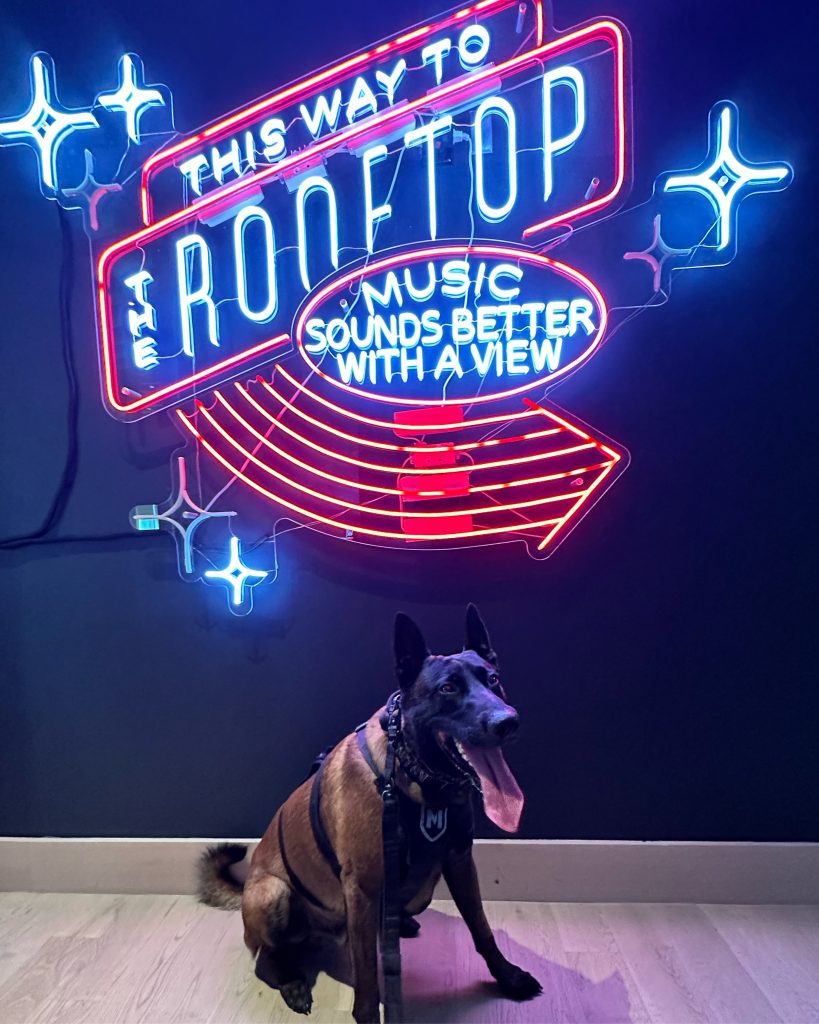
Explosive Dog Firearm Dog Gun Dog at Music Venue
Explosive and Firearm K9 Emery Poses at a Music Venue

Enhancing Security for Traveling Musicians and VIPs: The Role of Gun Detection Dogs by ScentWorks K9

Introduction: In the evolving landscape of event security, the safety of musicians, actors, and VIPs during tours and appearances remains a top priority. ScentWorks K9, a leading name in specialized canine security services in the United States, is pioneering the use of gun detection dogs to ensure a secure environment for these high-profile individuals.

The Need for Enhanced Security: The entertainment industry, with its high-profile events and large gatherings, is often vulnerable to security threats. The presence of firearms at such events can lead to potentially dangerous situations. Traditional security measures like metal detectors and body searches can be intrusive and time-consuming, creating a need for more efficient yet equally effective solutions.


Gun Detection Dogs: A Proactive Solution: ScentWorks K9’s gun detection dogs offer a discreet and highly effective way to enhance security. Trained to detect firearms and ammunition through their keen sense of smell, these dogs can quickly identify potential threats in a crowd, backstage areas, and event venues. This proactive approach ensures a safer environment for celebrities, musicians, and VIPs, without causing disruptions or delays.

Training and Expertise: ScentWorks K9’s gun detection dogs are trained using the latest techniques and are adept at working in various environments, from concerts and red-carpet events to private gatherings. The dogs are conditioned to work amidst large crowds and noise, making them ideal for the entertainment industry. Their handlers are also highly skilled professionals, ensuring a seamless integration of the dogs into the security protocol.

Advantages Over Traditional Security Measures:

Speed and Efficiency:

These dogs can quickly scan large areas and identify threats faster than conventional security checks.

Discretion:

Gun detection dogs work unobtrusively, maintaining the event’s ambiance while ensuring security.

High Accuracy:

With a heightened sense of smell, these dogs provide a high level of accuracy in detecting firearms.

Versatility:

They can operate in various settings and adapt to different scenarios, making them suitable for touring acts and events in multiple locations.

Customized Security Plans:

We tailor our K9 services to meet the unique needs and challenges, ensuring the most effective and efficient security solution.

Continued Support:

We provide continuous support and monitoring, ensuring our K9 services consistently meet your security needs and adapt to evolving challenges.

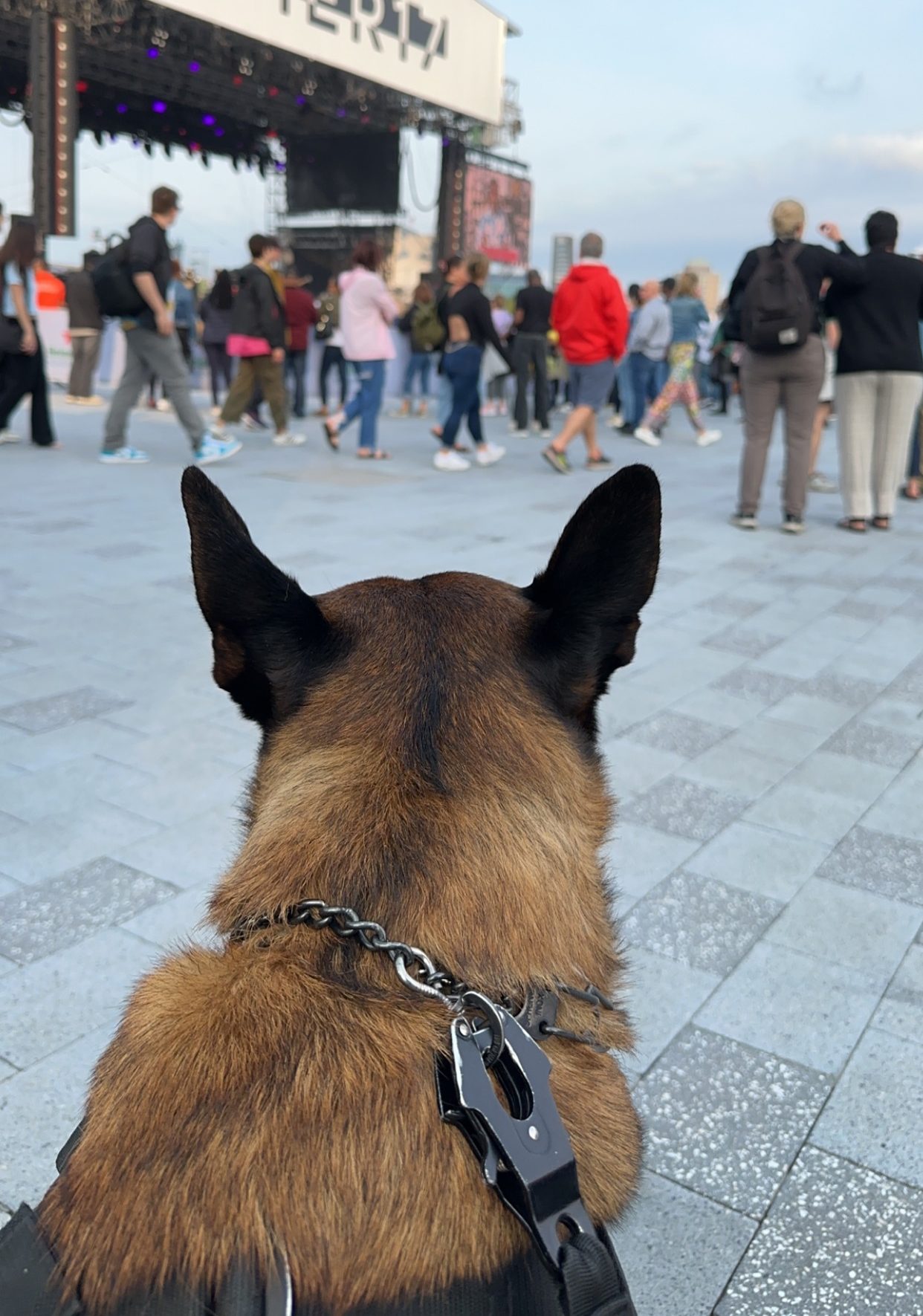
Explosive K9 and Firearm K9 Emery stands watch over a music venue

Conclusion: As traveling musicians, actors, and other VIPs face unique security challenges, ScentWorks K9’s gun detection dogs emerge as a crucial asset in their safety arsenal. These highly trained canines offer an innovative, efficient, and discreet solution to ensure the safety of high-profile individuals and their audiences. Investing in such advanced security measures reflects a commitment to safety without compromising the quality of the event experience.

For more information on how ScentWorks K9’s gun detection dogs can enhance security for your next event or tour, visit our website or contact us directly. Ensure the safety of your VIPs and guests with the most advanced and reliable security solutions available.

Our highly-trained canine security teams specialize in threat detection, prevention, and response, making them an invaluable asset to any educational institution. Don’t leave the safety of your students and staff to chance – invest in our expert K9 services and create a brighter, more secure future for your school community.

February 1, 2024 0 comments
1 FacebookTwitterPinterestEmail
Informational Posts

Can Dogs / K9s Smell Vape Pens?

by admin August 9, 2023
written by admin

CAN K9S DETECT VAPE PENS?

Discover the Capabilities of ScentWorks Detection Dogs

HAVE K9 DETECTION TEAMS KEPT UP WITH VAPE TECHNOLOGY?

In the world of law enforcement, military applications, and even private security, the K9’s extraordinary olfactory capabilities have long been harnessed to detect narcotics, explosives, and other illicit substances. However, in an era where alternative smoking methods such as vaping are becoming more prevalent, a pertinent question arises: Can dogs or K9s detect vape pens?

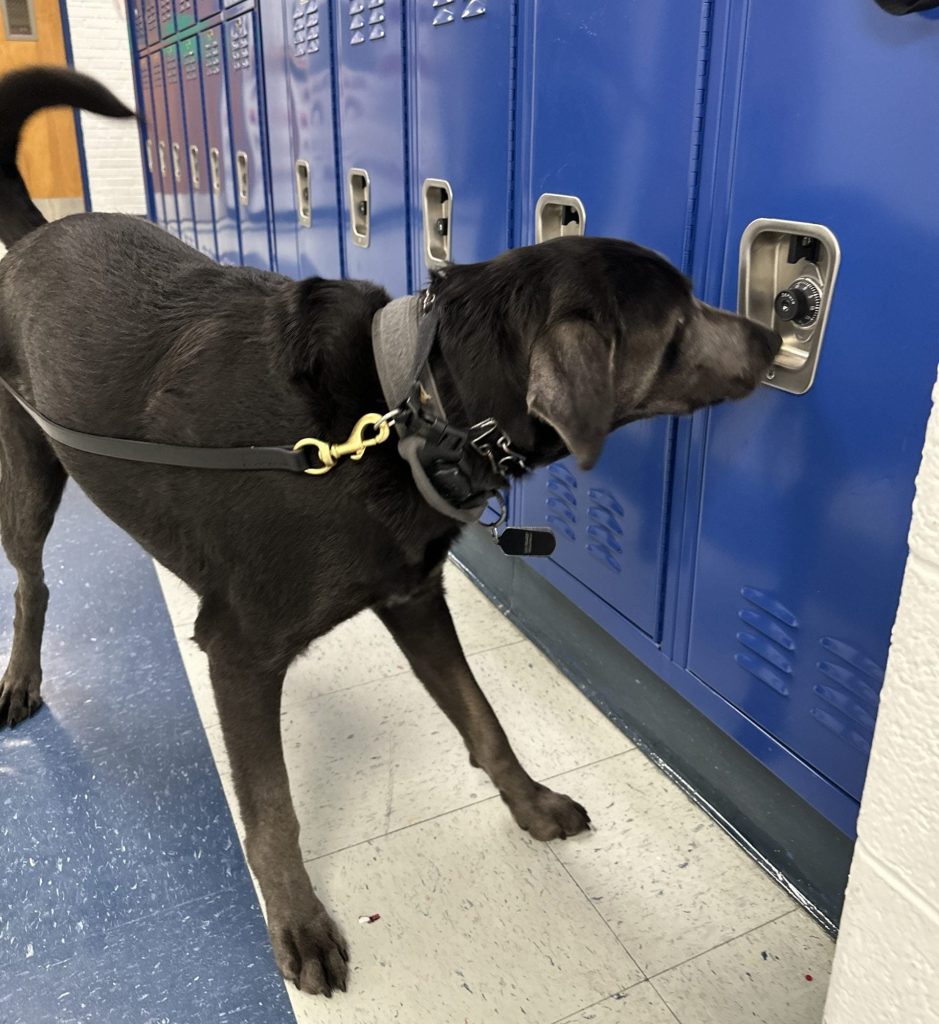
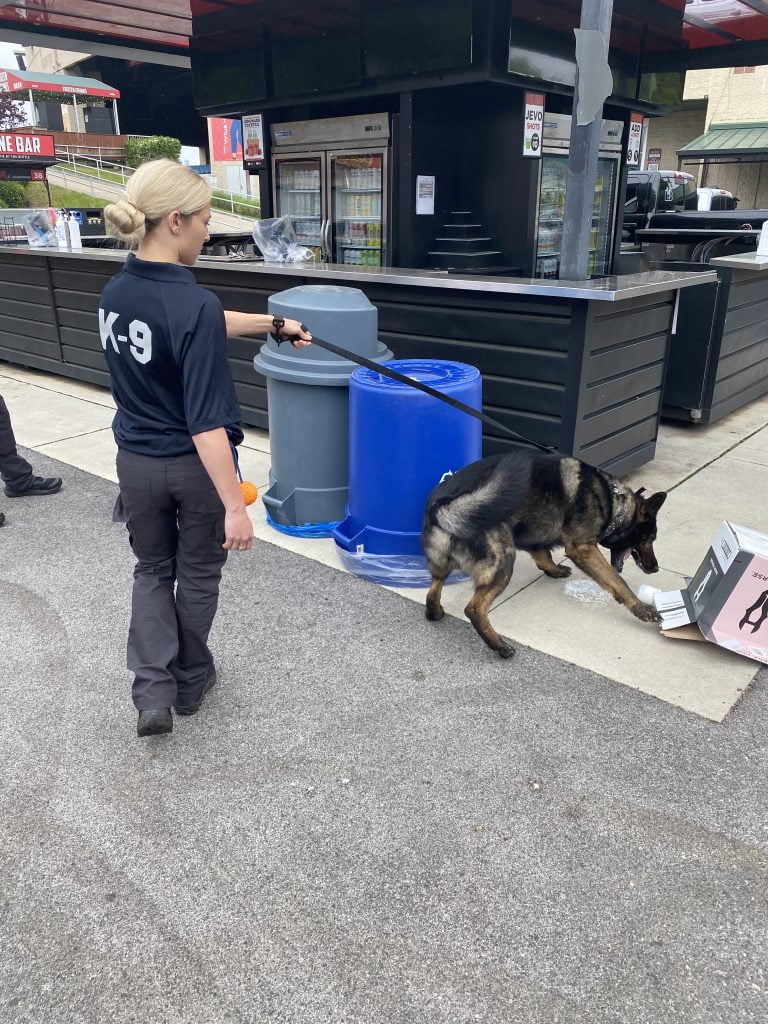
ScentWorks K9 Partner Evaluates a School Locker

VAPE PENS: WHAT'S INSIDE?

Vape pens are battery-powered devices that heat a liquid mixture, often containing nicotine, flavorings, and other additives, to produce an inhalable aerosol. The vaping liquid can contain various substances, including nicotine, propylene glycol, glycerin, and flavoring agents. But, can the distinct components of this mixture be detected by a K9’s sensitive nose?

ADVANCED OLFACTORY SENSES

Dogs have an incredibly keen sense of smell, far surpassing human abilities. Their olfactory system allows them to detect specific compounds in extremely minute concentrations. Dogs have as many as 300 million smell receptors in their noses, compared to about 5 million in humans. This, coupled with a part of their brain that is devoted to analyzing smells, 40 times larger than a human’s, enables them to detect a vast array of scents.

LEARN MORE ABOUT SCENT DETECTION

CAN K9S SMELL VAPE PENS?

The short answer is yes; trained K9s can detect vape pens or e-cigarettes. However, this ability is not inherent and requires specific training. Here’s a breakdown of how it works:

Identifying the Target Scent: Not all vape pens smell the same, as they can contain different flavors and chemicals. The dogs are trained to detect specific compounds present in common vaping products.

Training: Similar to training dogs to detect other substances, K9s can be taught to recognize the scent of vape pens. This involves positive reinforcement techniques where the dog is rewarded for successfully identifying the target scent.

Legal and Ethical Considerations: It is essential to understand that detecting vape pens is not equivalent to detecting illegal substances. Vaping is legal for adults in many jurisdictions, so using dogs to detect vape pens must be done in accordance with applicable laws and ethical considerations.

Limitations: Although K9s can be trained to detect vape pens, distinguishing between products containing nicotine and those that are nicotine-free can be challenging. Additionally, new products and variations in scent components may require ongoing training.

INQUIRE ABOUT VAPE DETECTION SERVICES

SCENTWORKS K9 VAPE DETECTION

At Scentworks K9, we offer specialized training programs to equip K9s with the ability to detect various substances, including vape pens. Our experienced trainers use scientifically-proven methods to provide reliable and efficient training, maintaining the highest ethical standards.

If you’re interested in learning more about K9 training for specific scent detection or have any inquiries related to our services, feel free to contact us at Scentworks K9. Your trust in our expertise inspires us to continue expanding our knowledge and providing top-notch services in the field of K9 olfactory training.

CONTACT US TO FIND OUT MORE

YOU MIGHT BE INTERESTED...

Can Dogs Smell Guns? How Firearms Detection Dogs Work

September 2, 2026

Lithium-Ion Battery Detection Dogs: Applications, Capabilities, and Limitations

August 31, 2026

Bed Bug Detection Dogs for Hotels: An Inspection Planning Guide

August 31, 2026

Drug Detection Dogs for Schools: A Planning Guide for Administrators

August 31, 2026

Bomb Detection Dogs for Events: A Security Planning and Hiring...

August 31, 2026

Mobile Firearm Detection Dogs: How K9 Crowd Screening Works

August 31, 2026

WHY CHOOSE US?

COMPREHENSIVE TRAINING

Our dogs undergo rigorous training led by experienced handlers to ensure they can reliably detect a wide range of substances. We continuously update our training techniques to stay ahead of emerging trends and threats.

CUSTOMIZED SOLUTIONS

We understand that each venue presents unique needs and challenges. At ScentWorks K9, we work closely with our clients to develop tailored solutions that meet their specific objectives.

CERTIFIED HANDLERS

Our handlers are certified professionals who have extensive experience in the field. They work alongside our dogs to ensure optimal performance and reliability during searches.

ONGOING SUPPORT

We provide ongoing support and assistance to our clients, offering regular follow-ups, refresher training for dogs, and continuous communication to address any concerns or changes in your facility's needs.

WHY CHOOSE US?

COMPREHENSIVE TRAINING

Our dogs undergo rigorous training led by experienced handlers to ensure they can reliably detect a wide range of substances. We continuously update our training techniques to stay ahead of emerging trends and threats.

CUSTOMIZED SOLUTIONS

We understand that each venue presents unique needs and challenges. At ScentWorks K9, we work closely with our clients to develop tailored solutions that meet their specific objectives.

CERTIFIED HANDLERS

Our handlers are certified professionals who have extensive experience in the field. They work alongside our dogs to ensure optimal performance and reliability during searches.

ONGOING SUPPORT

We provide ongoing support and assistance to our clients, offering regular follow-ups, refresher training for dogs, and continuous communication to address any concerns or changes in your facility's needs.

TRAINING AND CERTIFICATION

Our detection dogs undergo extensive training to ensure they are equipped to detect a wide range of substances. Typically, the training process involves exposing the dogs to various scents, enabling them to differentiate between the target substance and other odors. Once the dog has mastered scent detection, it learns to alert its handler to the presence of the substance through specific behaviors such as sitting or pawing at the source.

It is crucial that detection dogs and their handlers are certified by a reputable organization, such as the National Narcotic Detector Dog Association (NNDDA) or the United States Police Canine Association (USPCA). This ensures that the dogs are reliable and effective in their work.

CONTACT US

Interested in our K9 detection services? Send us a message, and we'll get back to you as soon as possible.

GET IN TOUCH
  • CALL US
  • EMAIL US
  • MESSAGE US
August 9, 2023 0 comments
0 FacebookTwitterPinterestEmail
Informational Posts

What You Need to Know About Drug Detection Dogs

by admin April 24, 2023
written by admin

WHAT YOU NEED TO KNOW ABOUT DRUG DETECTION DOGS

The Basics of K9 Scent Detection

HOW DO DRUG SNIFFING K9S WORK?

Drug detection dogs, also known as K9 units or narcotic detector dogs, play a crucial role in law enforcement, border control, and security operations around the world. These highly trained animals have exceptional abilities to detect illicit substances, even when they are concealed in vehicles, luggage, or clothing. This article will discuss the selection, training, and capabilities of drug detection dogs, as well as their limitations and ethical considerations.

SELECTION AND BREEDING OF DRUG DETECTION DOGS

Not all dogs are suitable for drug detection work. The ideal candidates possess a high level of energy, intelligence, and an acute sense of smell. Breeds commonly used for drug detection include German Shepherds, Belgian Malinois, Labrador Retrievers, and Springer Spaniels. These breeds are known for their strong work ethic, trainability, and olfactory abilities.

To ensure the highest success rate, many organizations carefully select and breed dogs for this specialized work. Dogs are usually chosen based on their temperament, focus, and drive. Breeders often use genetic testing to identify dogs with the best potential for drug detection.

ADVANCED OLFACTORY SENSES

Dogs have an incredibly keen sense of smell, far surpassing human abilities. Their olfactory system allows them to detect specific compounds in extremely minute concentrations. Dogs have as many as 300 million smell receptors in their noses, compared to about 5 million in humans. This, coupled with a part of their brain that is devoted to analyzing smells, 40 times larger than a human’s, enables them to detect a vast array of scents.

LEARN MORE ABOUT SCENT DETECTION

TRAINING PROCESS

Not all dogs are suitable for drug detection work. The ideal candidates possess a high level of energy, intelligence, and an acute sense of smell. Breeds commonly used for drug detection include German Shepherds, Belgian Malinois, Labrador Retrievers, and Springer Spaniels. These breeds are known for their strong work ethic, trainability, and olfactory abilities.

To ensure the highest success rate, many organizations carefully select and breed dogs for this specialized work. Dogs are usually chosen based on their temperament, focus, and drive. Breeders often use genetic testing to identify dogs with the best potential for drug detection.

CAPABILITIES

Drug detection dogs have a remarkable ability to detect even trace amounts of illicit substances. They can locate drugs hidden in creative ways, such as within containers, inside walls, or buried underground. Their sense of smell is so sensitive that they can distinguish between individual components of a drug, making it difficult for traffickers to mask the scent with other substances.

INQUIRE ABOUT DETECTION DOG SERVICES

HOW DETECTION DOGS CAN PROTECT AND BENEFIT YOU

Drug detection dogs are valuable assets in the fight against drug trafficking and abuse. Their keen sense of smell, combined with specialized training, makes them highly effective at locating hidden drugs. However, it is important to acknowledge their limitations and address ethical concerns to ensure the responsible and effective use of these remarkable animals.

K9s are trained to detect firearms, explosives, and other dangerous materials. By using K9s to search the premises of a church, administrators can identify potential threats and take action before they become a danger to the congregation.

One of the benefits of using K9s in synagogues and churches is that they are a non-intrusive security measure. Unlike metal detectors and other security screening methods, K9s can detect threats without causing inconvenience or discomfort to members of the congregation. This makes K9s a more acceptable and less invasive solution to synagogue, church, mosque security.

Moreover, the presence of K9s can also act as a deterrent to potential attackers. Knowing that a church has K9s on site can make potential attackers think twice about targeting that church. This can help prevent violent incidents from occurring in the first place.

CONTACT US TO FIND OUT MORE

YOU MIGHT BE INTERESTED...

Can Dogs Smell Guns? How Firearms Detection Dogs Work

September 2, 2026

Lithium-Ion Battery Detection Dogs: Applications, Capabilities, and Limitations

August 31, 2026

Bed Bug Detection Dogs for Hotels: An Inspection Planning Guide

August 31, 2026

Drug Detection Dogs for Schools: A Planning Guide for Administrators

August 31, 2026

Bomb Detection Dogs for Events: A Security Planning and Hiring...

August 31, 2026

Mobile Firearm Detection Dogs: How K9 Crowd Screening Works

August 31, 2026

WHY CHOOSE US?

COMPREHENSIVE TRAINING

Our dogs undergo rigorous training led by experienced handlers to ensure they can reliably detect a wide range of substances. We continuously update our training techniques to stay ahead of emerging trends and threats.

CUSTOMIZED SOLUTIONS

We understand that each venue presents unique needs and challenges. At ScentWorks K9, we work closely with our clients to develop tailored solutions that meet their specific objectives.

CERTIFIED HANDLERS

Our handlers are certified professionals who have extensive experience in the field. They work alongside our dogs to ensure optimal performance and reliability during searches.

ONGOING SUPPORT

We provide ongoing support and assistance to our clients, offering regular follow-ups, refresher training for dogs, and continuous communication to address any concerns or changes in your facility's needs.

WHY CHOOSE US?

COMPREHENSIVE TRAINING

Our dogs undergo rigorous training led by experienced handlers to ensure they can reliably detect a wide range of substances. We continuously update our training techniques to stay ahead of emerging trends and threats.

CUSTOMIZED SOLUTIONS

We understand that each venue presents unique needs and challenges. At ScentWorks K9, we work closely with our clients to develop tailored solutions that meet their specific objectives.

CERTIFIED HANDLERS

Our handlers are certified professionals who have extensive experience in the field. They work alongside our dogs to ensure optimal performance and reliability during searches.

ONGOING SUPPORT

We provide ongoing support and assistance to our clients, offering regular follow-ups, refresher training for dogs, and continuous communication to address any concerns or changes in your facility's needs.

TRAINING AND CERTIFICATION

Our detection dogs undergo extensive training to ensure they are equipped to detect a wide range of substances. Typically, the training process involves exposing the dogs to various scents, enabling them to differentiate between the target substance and other odors. Once the dog has mastered scent detection, it learns to alert its handler to the presence of the substance through specific behaviors such as sitting or pawing at the source.

It is crucial that detection dogs and their handlers are certified by a reputable organization, such as the National Narcotic Detector Dog Association (NNDDA) or the United States Police Canine Association (USPCA). This ensures that the dogs are reliable and effective in their work.

CONTACT US

Interested in our K9 detection services? Send us a message, and we'll get back to you as soon as possible.

GET IN TOUCH
  • CALL US
  • EMAIL US
  • MESSAGE US
April 24, 2023 0 comments
0 FacebookTwitterPinterestEmail
Informational Posts

What drugs can a dog find?

by admin March 14, 2022
written by admin

WHAT DRUGS CAN A DOG IDENTIFY?

Discover Our K9s' Detection Capabilities

DRUG DOGS: AN OVERVIEW

Drug detection dogs, also known as “narcotic K9s” or “sniffer dogs,” are highly trained canines used by law enforcement agencies around the world to locate a variety of illegal substances. These extraordinary dogs possess a keen sense of smell, making them indispensable in the fight against drug trafficking and abuse. In this article, we explore the range of drugs that drug dogs can detect and how their capabilities have become essential in drug-related investigations.

THE K9 NOSE KNOWS

A dog’s sense of smell is approximately 10,000 to 100,000 times more sensitive than a human’s, allowing them to detect minute traces of various substances. This remarkable ability is due to the presence of around 300 million olfactory receptors in a dog’s nose, compared to a mere six million in humans. Furthermore, dogs have a specialized area in their brains dedicated to analyzing different scents, which is proportionally 40 times larger than that of humans.

COMMON DRUGS DETECTED BY K9S

Drug detection dogs are trained to identify and alert their handlers to the presence of specific illegal substances. While the exact list of drugs a drug dog can detect may vary depending on the dog’s training and the needs of the law enforcement agency, some common substances include:

Marijuana (cannabis): Despite its increasing legalization for recreational and medicinal use, marijuana remains a controlled substance in many jurisdictions. Drug dogs are trained to detect the scent of cannabis plants, as well as processed marijuana products.

Cocaine: As a highly addictive stimulant drug, cocaine remains a significant concern for law enforcement. Drug dogs are adept at detecting the odor of both powder and crack cocaine.

Heroin: A powerful opioid, heroin is both dangerous and illegal. Drug dogs are trained to locate the drug in its various forms, including powder, tar, and black tar heroin.

Methamphetamine: Also known as crystal meth or simply meth, this potent and illegal stimulant is readily detectable by trained drug dogs.

MDMA (Ecstasy): MDMA, commonly known as ecstasy or molly, is an illegal psychoactive drug. K9 units can effectively detect its presence in pill or powder form.

Fentanyl and Other Synthetic Opioids: The rise of synthetic opioids like fentanyl has led to a growing number of overdose deaths. Drug dogs are now trained to detect these potent substances, which are often mixed with other drugs, posing a severe risk to users.

 Any Narcotic or Pill: In theory dogs can be trained to find any specific narcotic including pills that are legal and regulated, but that may be restricted at specific drug rehabs, prisons, or other restricted areas. These dogs aren’t utilized in Law Enforcement as the positive indication from the dog may be on legal narcotics / drugs.  

THE K9 NOSE KNOWS

A dog’s sense of smell is approximately 10,000 to 100,000 times more sensitive than a human’s, allowing them to detect minute traces of various substances. This remarkable ability is due to the presence of around 300 million olfactory receptors in a dog’s nose, compared to a mere six million in humans. Furthermore, dogs have a specialized area in their brains dedicated to analyzing different scents, which is proportionally 40 times larger than that of humans.

COMMON DRUGS DETECTED BY K9S

Drug detection dogs are trained to identify and alert their handlers to the presence of specific illegal substances. While the exact list of drugs a drug dog can detect may vary depending on the dog’s training and the needs of the law enforcement agency, some common substances include:

Marijuana (cannabis): Despite its increasing legalization for recreational and medicinal use, marijuana remains a controlled substance in many jurisdictions. Drug dogs are trained to detect the scent of cannabis plants, as well as processed marijuana products.

Cocaine: As a highly addictive stimulant drug, cocaine remains a significant concern for law enforcement. Drug dogs are adept at detecting the odor of both powder and crack cocaine.

Heroin: A powerful opioid, heroin is both dangerous and illegal. Drug dogs are trained to locate the drug in its various forms, including powder, tar, and black tar heroin.

Methamphetamine: Also known as crystal meth or simply meth, this potent and illegal stimulant is readily detectable by trained drug dogs.

MDMA (Ecstasy): MDMA, commonly known as ecstasy or molly, is an illegal psychoactive drug. K9 units can effectively detect its presence in pill or powder form.

Fentanyl and Other Synthetic Opioids: The rise of synthetic opioids like fentanyl has led to a growing number of overdose deaths. Drug dogs are now trained to detect these potent substances, which are often mixed with other drugs, posing a severe risk to users.

 Any Narcotic or Pill: In theory dogs can be trained to find any specific narcotic including pills that are legal and regulated, but that may be restricted at specific drug rehabs, prisons, or other restricted areas. These dogs aren’t utilized in Law Enforcement as the positive indication from the dog may be on legal narcotics / drugs.  

EXPLORE OUR NARCOTIC DETECTION SERVICES

TRAINING AND TECHNIQUES

To effectively detect drugs, sniffer dogs undergo rigorous training, often starting as puppies. They are introduced to specific scents associated with the drugs they will be searching for and taught to associate these scents with rewards, such as toys or treats. Over time, the dogs learn to alert their handlers to the presence of drugs by demonstrating specific behaviors, such as sitting, barking, or scratching.

Law enforcement agencies use a variety of techniques to deploy drug dogs in the field. These canines are often utilized at airports, border crossings, and shipping ports to inspect luggage, cargo, and vehicles for concealed drugs. They are also used during search warrants, traffic stops, and in schools to detect drugs and maintain public safety.

DISCOVER SCENTWORKS K9 DRUG DETECTION
Explosive and Firearm Detection K9 Jumanji searches a music venue

TRAINING AND TECHNIQUES

To effectively detect drugs, sniffer dogs undergo rigorous training, often starting as puppies. They are introduced to specific scents associated with the drugs they will be searching for and taught to associate these scents with rewards, such as toys or treats. Over time, the dogs learn to alert their handlers to the presence of drugs by demonstrating specific behaviors, such as sitting, barking, or scratching.

Law enforcement agencies use a variety of techniques to deploy drug dogs in the field. These canines are often utilized at airports, border crossings, and shipping ports to inspect luggage, cargo, and vehicles for concealed drugs. They are also used during search warrants, traffic stops, and in schools to detect drugs and maintain public safety.

DISCOVER OUR PREMIER NARCOTIC DETECTION SERVICES

Drug detection dogs are invaluable tools in the fight against drug trafficking and abuse. Their incredible sense of smell enables them to locate a wide range of illegal substances, contributing to a safer society. As the landscape of drug abuse and trafficking evolves, the training of these remarkable canines will continue to adapt, ensuring they remain a vital component in combating drug-related crime.

CONTACT US TO FIND OUT MORE

YOU MIGHT BE INTERESTED...

Can Dogs Smell Guns? How Firearms Detection Dogs Work

September 2, 2026

Lithium-Ion Battery Detection Dogs: Applications, Capabilities, and Limitations

August 31, 2026

Bed Bug Detection Dogs for Hotels: An Inspection Planning Guide

August 31, 2026

Drug Detection Dogs for Schools: A Planning Guide for Administrators

August 31, 2026

Bomb Detection Dogs for Events: A Security Planning and Hiring...

August 31, 2026

Mobile Firearm Detection Dogs: How K9 Crowd Screening Works

August 31, 2026

WHY CHOOSE US?

COMPREHENSIVE TRAINING

Our dogs undergo rigorous training led by experienced handlers to ensure they can reliably detect a wide range of substances. We continuously update our training techniques to stay ahead of emerging trends and threats.

CUSTOMIZED SOLUTIONS

We understand that each venue presents unique needs and challenges. At ScentWorks K9, we work closely with our clients to develop tailored solutions that meet their specific objectives.

CERTIFIED HANDLERS

Our handlers are certified professionals who have extensive experience in the field. They work alongside our dogs to ensure optimal performance and reliability during searches.

ONGOING SUPPORT

We provide ongoing support and assistance to our clients, offering regular follow-ups, refresher training for dogs, and continuous communication to address any concerns or changes in your facility's needs.

WHY CHOOSE US?

COMPREHENSIVE TRAINING

Our dogs undergo rigorous training led by experienced handlers to ensure they can reliably detect a wide range of substances. We continuously update our training techniques to stay ahead of emerging trends and threats.

CUSTOMIZED SOLUTIONS

We understand that each venue presents unique needs and challenges. At ScentWorks K9, we work closely with our clients to develop tailored solutions that meet their specific objectives.

CERTIFIED HANDLERS

Our handlers are certified professionals who have extensive experience in the field. They work alongside our dogs to ensure optimal performance and reliability during searches.

ONGOING SUPPORT

We provide ongoing support and assistance to our clients, offering regular follow-ups, refresher training for dogs, and continuous communication to address any concerns or changes in your facility's needs.

TRAINING AND CERTIFICATION

Our detection dogs undergo extensive training to ensure they are equipped to detect a wide range of substances. Typically, the training process involves exposing the dogs to various scents, enabling them to differentiate between the target substance and other odors. Once the dog has mastered scent detection, it learns to alert its handler to the presence of the substance through specific behaviors such as sitting or pawing at the source.

It is crucial that detection dogs and their handlers are certified by a reputable organization, such as the National Narcotic Detector Dog Association (NNDDA) or the United States Police Canine Association (USPCA). This ensures that the dogs are reliable and effective in their work.

CONTACT US

Interested in our K9 detection services? Send us a message, and we'll get back to you as soon as possible.

GET IN TOUCH
  • CALL US
  • EMAIL US
  • MESSAGE US
March 14, 2022 0 comments
0 FacebookTwitterPinterestEmail
Newer Posts
Older Posts

Recent Posts

  • Can Dogs Smell Guns? How Firearms Detection Dogs Work
  • Lithium-Ion Battery Detection Dogs: Applications, Capabilities, and Limitations
  • Bed Bug Detection Dogs for Hotels: An Inspection Planning Guide
  • Drug Detection Dogs for Schools: A Planning Guide for Administrators
  • Bomb Detection Dogs for Events: A Security Planning and Hiring Guide

Recent Comments

No comments to show.

Keep in touch

Facebook Twitter Instagram Pinterest Linkedin Youtube

Recent Posts

  • Can Dogs Smell Guns? How Firearms Detection Dogs Work

  • Lithium-Ion Battery Detection Dogs: Applications, Capabilities, and Limitations

  • Bed Bug Detection Dogs for Hotels: An Inspection Planning Guide

  • Drug Detection Dogs for Schools: A Planning Guide for Administrators

  • Bomb Detection Dogs for Events: A Security Planning and Hiring Guide

  • Mobile Firearm Detection Dogs: How K9 Crowd Screening Works

Categories

  • Detector Dogs in the News (1)
  • Informational Posts (11)
  • Pet Care (1)
  • Uncategorized (2)
  • Facebook
  • Instagram
  • Linkedin
  • Email
  • Tiktok
Footer Logo
  • Home
  • Services
    • Bomb & Explosives Detection
    • PBIED / Mobile Odor Detection
    • Firearms Detection
    • Narcotic Detection
    • Electronics Detection
    • Lithium-Ion Detection
    • Bed Bug Detection
    • Mold Detection
    • Dog Training
  • Sectors
    • Houses of Worship
    • Schools
    • Rehab Centers
    • Concert and Event Venues
    • Hotels and Casinos
    • Amusement Parks and Carnivals
    • Sports Venues and Stadiums
    • Residences
  • About
  • Contact

@2026 - All Right Reserved.


Back To Top
ScentWorks K9
  • Home
  • Services
    • Bomb & Explosives Detection
    • PBIED / Mobile Odor Detection
    • Firearms Detection
    • Narcotic Detection
    • Electronics Detection
    • Lithium-Ion Detection
    • Bed Bug Detection
    • Mold Detection
    • Dog Training
  • Sectors
    • Houses of Worship
    • Schools
    • Rehab Centers
    • Concert and Event Venues
    • Hotels and Casinos
    • Amusement Parks and Carnivals
    • Sports Venues and Stadiums
    • Residences
ScentWorks K9
  • About
  • Contact